James Hardie Junior ADU Conversion: The San Francisco Owner’s Guide
If you’re planning a junior accessory dwelling unit (JADU) conversion using James Hardie siding and trim, the installed cost in San Francisco typically lands between $45,000 and $120,000 depending on whether you’re converting an existing garage or building new within a home’s footprint. We stock and install James Hardie plank, panel, and trim products for JADU conversions throughout San Francisco, and most material orders arrive at your job site within 5 to 10 business days. Homeowners usually reach out to us after realizing their existing siding won’t pass San Francisco’s energy and fire code requirements, or when they’ve priced out stucco and want a cladding that holds up better against the city’s fog, salt air, and wet winters.
Which James Hardie Models This Applies To
James Hardie makes three product lines that matter for a JADU conversion in San Francisco: HardiePlank lap siding, HardiePanel vertical siding, and HardieTrim boards. The plank comes in 4-foot by 8-foot sheets and individual lap boards in widths from 5.25 inches to 8.25 inches, with a thickness of roughly 5/16 inch. HardiePanel arrives in 4×8, 4×9, and 4×10 sheets, which matters when you’re working with a garage conversion and want to minimize seams on a long wall. The key compatibility gotcha we see on San Francisco JADU projects: HardieTrim is not rated for ground contact, so any trim board that will sit within 6 inches of grade needs to be separated from soil, concrete, or roofing with a 1/4-inch gap, or you’ll void the 30-year limited warranty. We recommend OEM James Hardie products for all JADU exterior work. Aftermarket fiber cement equivalents exist, but they don’t carry the same San Francisco fire rating documentation, and the Department of Building Inspection will ask for it during plan review.
Signs Your James Hardie Junior ADU Conversion Is Failing
- Swelling or buckling at the bottom edge of siding boards. This almost always means the boards were installed too close to grade or against a concrete slab. Fiber cement wicks moisture upward, and once it swells, the board is done. The fix is removal, a proper moisture gap, and replacement.
- Paint peeling in horizontal bands across one wall, especially on the west-facing side of a San Francisco garage. That pattern points to trapped moisture behind the board, not a paint failure. We find missing or improperly lapped housewrap behind about half the JADU conversions we inspect in this city.
- Cracking around fastener heads. James Hardie requires either blunt-tipped nails or specific corrosion-resistant screws. When someone uses standard drywall screws, the board flexes and cracks around each fastener within two or three fog seasons.
- Gaps opening at butt joints between boards. In San Francisco’s wet winters, fiber cement moves more than people expect. Joints should be flashed with aluminum or PVC flashing and caulked. When builders skip flashing to save a few dollars, those gaps open up and start feeding water into your wall cavity.
- Trim separating from corners or window openings. HardieTrim needs to be face-nailed at 16 inches on center and backed with a corrosion-resistant flashing. If it’s installed with adhesive only or the wrong nail pattern, San Francisco’s wind loads will eventually pull it loose.
Replacement Cost & What’s Included
For a typical San Francisco JADU conversion with 400 to 600 square feet of exterior wall area, expect installed James Hardie siding and trim costs to run between $12,000 and $22,000 for materials and labor. That includes removal of old cladding, housewrap and flashing installation, new HardiePlank or HardiePanel, HardieTrim around windows and corners, and paint-ready or factory-finished surfaces. The range moves based on wall height, access, whether you’re working around existing windows or cutting new openings, and whether we’re matching Hardie’s ColorPlus factory finish or priming for on-site paint. The labor piece usually accounts for 55 to 65 percent of the total. Materials for the same scope typically run $4,500 to $8,000. Every quote we write for James Hardie work in San Francisco includes a line-by-line materials list, because homeowners should know exactly what they’re paying for before the first board comes off the wall.
DIY or Call Us?
Fiber cement is not a material that forgives shortcuts. Cutting HardiePlank produces silica dust, which requires a respirator and a dust-collecting saw setup, not just a bandana over your face. The boards are heavy and brittle; a sheet of HardiePanel weighs 75 pounds, and dropping one on a corner ruins it. You can safely inspect your JADU exterior: walk the perimeter, look for the swelling, cracking, and gap issues listed above, and check that bottom gap to grade with a tape measure. If you find anything we described, call us at (424) 328-5746. We’ll send someone to look, tell you what’s actually wrong, and put the fix in writing with a firm price.
FAQs
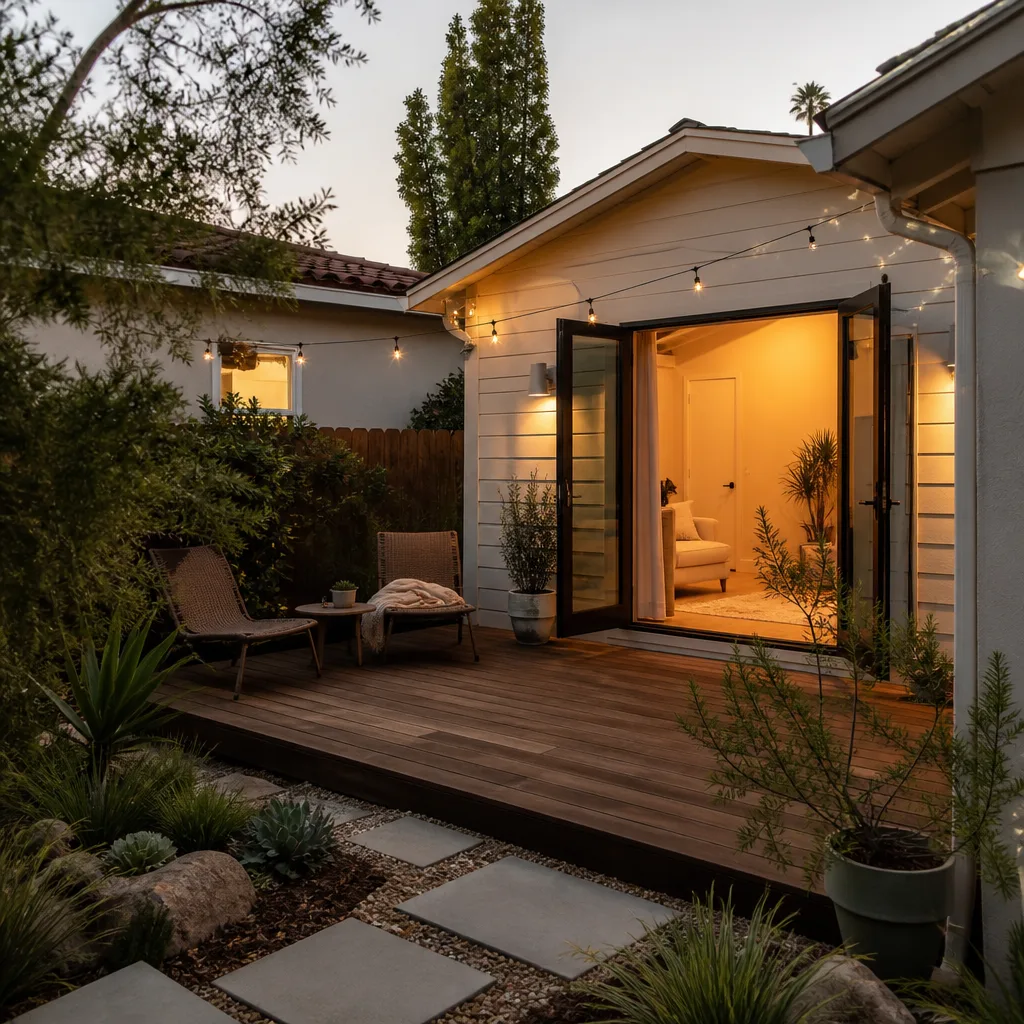
James Hardie warrants its fiber cement products for 30 years, and in our experience across San Francisco, properly installed HardiePlank and HardiePanel routinely last 25 to 40 years before needing replacement. The factors that shorten that lifespan in this city are improper ground clearance, missing flashing at joints and penetrations, and failure to repaint exposed edges every 10 to 15 years. Call (424) 328-5746 if you want one of our techs to assess what’s actually on your JADU right now.
No. Once fiber cement has absorbed enough moisture to swell, crack, or delaminate, the structural integrity of the board is compromised and patching compounds won’t bond reliably. The board needs to be removed and replaced, and the underlying moisture condition corrected first. We’ll show you the damaged board and the cause before we quote the replacement.
For a typical San Francisco garage-to-JADU conversion of 400 to 600 square feet of wall area, expect 4 to 7 working days from first board removal to final trim installation. Weather, wall height, and the condition of the existing sheathing can add a day or two. We’ll give you a written schedule with the quote, and we don’t hand it over unless we can actually hold it.
We stock common HardiePlank widths, 4×8 HardiePanel, and standard HardieTrim profiles in our San Francisco yard, so if we identify a match during the estimate, we can usually start within a week. Less common widths, ColorPlus factory finishes, and specialty trim profiles are ordered per job and typically arrive in 5 to 10 business days. We’ll tell you which category your JADU falls into before you commit to anything.
Get a Written Price for Your James Hardie JADU Conversion
If the siding on your San Francisco junior ADU is failing, don’t guess at the fix. Call Benson ADU San Francisco at (424) 328-5746 and we’ll schedule a walkthrough, show you exactly what’s wrong, and hand you a written price before any work begins. Price it in writing, build it right, no surprises.
Written by Troy Eastman, Owner & Lead Builder, Benson ADU San Francisco at Benson ADU San Francisco, serving San Francisco and nearby areas.