Title 24 Energy Compliance in San Francisco, CA
Title 24 energy compliance in San Francisco is the verification that your ADU or home addition meets California’s energy-efficiency building code – covering insulation, windows, HVAC, lighting, and water heating – before a building permit is issued. Most San Francisco ADU projects require two Title 24 reports: a prescriptive or performance analysis during design, and a compliance certificate after construction. At Benson ADU San Francisco, we handle both ends of that paperwork inside the larger ADU Design & Permitting in San Francisco process, so you don’t have to chase down an outside consultant. If you’re planning an ADU, a JADU conversion, or a room addition anywhere in the city, call us at (424) 328-5746 and we’ll walk you through what Title 24 means for your specific project.
Here’s the thing most homeowners don’t hear from their contractor until it’s too late: Title 24 isn’t a single document. It’s a set of calculations that prove your project’s energy design meets California’s code, and those calculations get reviewed by the San Francisco Department of Building Inspection before your plans are approved. Get the report wrong, and your permit stalls. Get it right, and you’ve also designed a building that costs less to heat and cool every month. We produce both the design-phase report and the final verification as a standard part of our ADU permitting work – and we put that in writing before you sign anything.
We’re part of the Relay Home Co. family, founded in 2006, and every project we take on runs through The Relay Visibility Guarantee: a written price before work starts, a 365-Day Done Right Promise, background-checked uniformed technicians on site, and a live person answering the phone around the clock. That’s the frame around our Title 24 work. You’ll know exactly what the compliance reports cost, who’s preparing them, and when they’re done.
When You Need Title 24 Energy Compliance
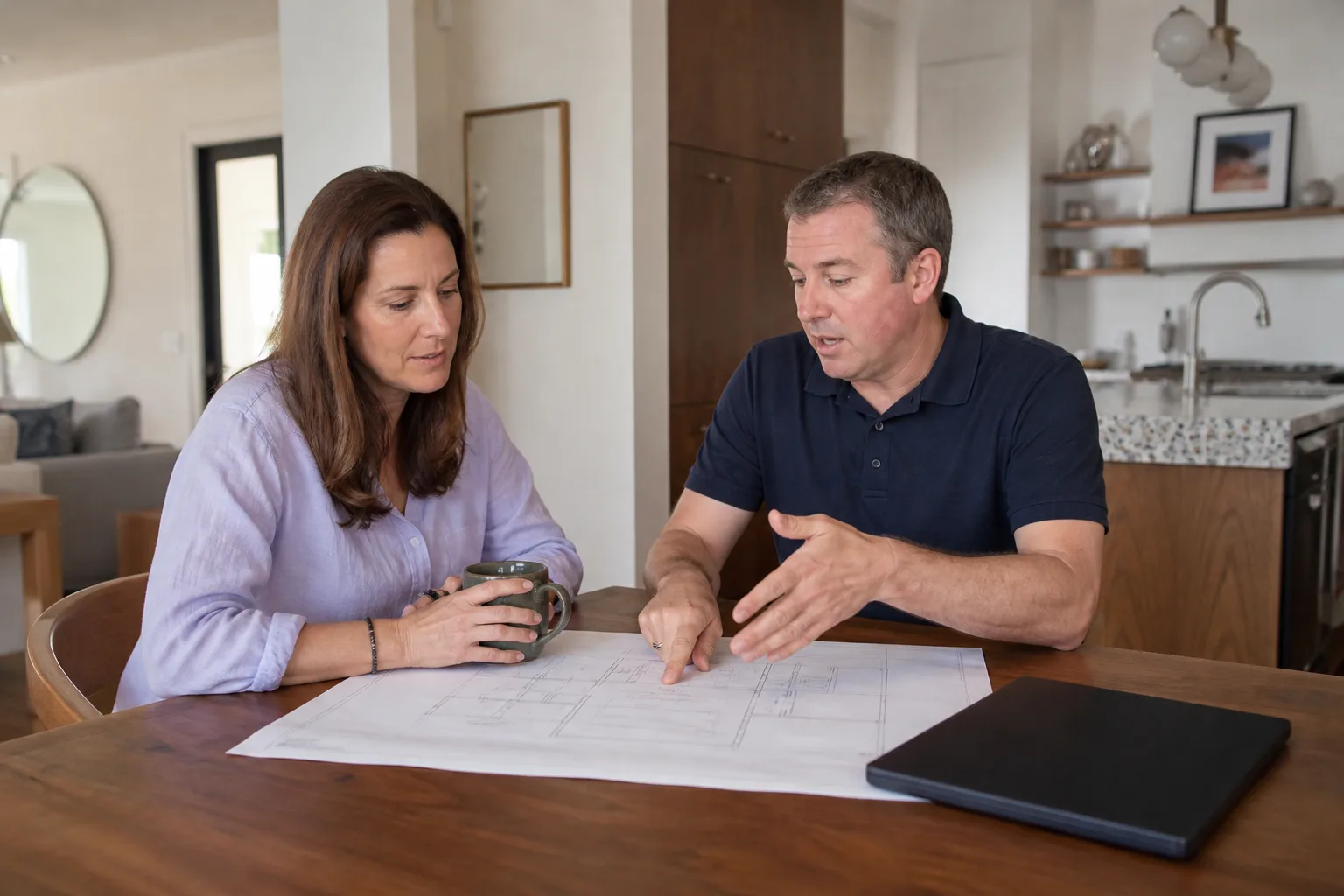
Most people don’t think about Title 24 until a permit reviewer asks for it. Here are the situations where we see it come up on ADU and addition projects in San Francisco:
- You’re adding square footage. Any new conditioned space – an ADU, a JADU, a room addition – triggers an energy analysis. Even a garage conversion that turns unconditioned space into living space has to demonstrate compliance.
- Your plans came back with a correction or “rescheck” request. San Francisco plan reviewers routinely ask for updated Title 24 documentation when insulation levels, window specs, or HVAC choices don’t match the energy model.
- You’re building with prefab panels or modular components. Prefab brands like Boxabl and Plant Prefab have specific energy performance data built into their assemblies. That data has to be mapped into the Title 24 report correctly, or the permit office kicks it back.
- Your ADU is all-electric or includes a heat pump water heater. The energy model changes significantly when there’s no gas line. The Title 24 analysis is your proof that the all-electric design meets or exceeds the performance baseline.
- The project is done, but you need the final compliance certificate. You can’t legally close out your building permit without the post-construction verification. We’ve had homeowners call us months after another contractor finished, stuck in permit limbo because nobody filed the final energy documents.
- You’re applying for utility rebates or financing tied to energy performance. Some programs require Title 24 documentation to qualify. If you’re building a high-efficiency ADU, it’s worth having the paperwork in order from day one.
Our Title 24 Energy Compliance Process
We fold Title 24 into your ADU design and permitting timeline so it doesn’t become a separate headache. Here’s how it works with Benson ADU San Francisco:
- Design and energy modeling, together. We start the Title 24 analysis during your ADU design phase – not after the plans are finished. Choosing the right window package, wall insulation, and mechanical system early saves you money and keeps the energy model simple. If you’re considering a prefab ADU from Boxabl, Plant Prefab, or Tuff Shed, we map that product’s existing energy data directly into the report.
- Written price before the analysis begins. You’ll get a line-item price for the Title 24 design analysis and the final compliance certificate as part of your overall project quote. That’s under The Relay Visibility Guarantee: a written price before any work starts, no exceptions.
- We prepare and submit the report to the San Francisco Department of Building Inspection. Our team handles the filing, including the HERS (Home Energy Rating System) documentation when the project calls for it. You don’t have to learn what a HERS rater is. We already know.
- We track the permit review and address any corrections. If the plan reviewer raises a question about fenestration, insulation values, or HVAC efficiency, we respond with the documentation needed to move the permit forward.
- Post-construction verification. After the build, we complete the final Title 24 compliance certification so your permit can be closed out. No dangling paperwork, no last-minute surprise.
- Digital documentation delivered to you. You receive copies of every energy document for your records, along with a digital invoice payable by link. If anything ever needs to be revisited, you have the full paper trail.
And if anything about the permit or compliance process isn’t done right, our 365-Day Done Right Promise applies. That’s not marketing language. It’s a written guarantee stamped on every project we take.
Title 24 Energy Compliance Pricing in San Francisco
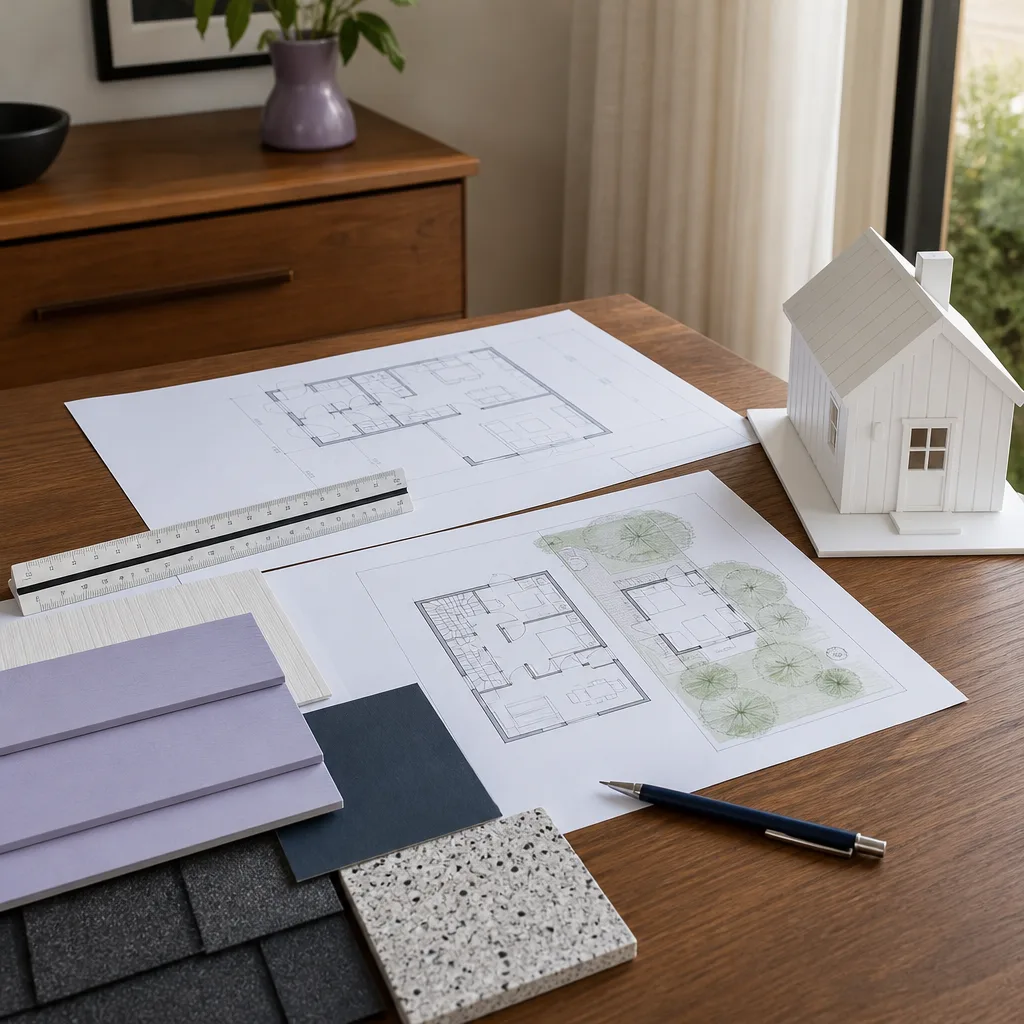
What does Title 24 compliance cost in San Francisco? For a typical single-ADU project, the design-phase energy analysis runs roughly $300 to $700, and the final compliance certificate adds another $150 to $400. Those are line-item numbers you’ll see in writing. Larger and more complex projects – multi-ADU lots, non-standard HVAC, or additions with heavy glazing – can push the combined total into the $1,000 to $2,000 range. We quote it as a fixed price before the work begins, not as an hourly mystery.
Here’s what moves the number:
- Project size and complexity. A single-box ADU is faster to model than a two-story addition with a mixed mechanical system.
- Prefab vs. site-built. Prefab products from brands like Boxabl and Plant Prefab come with energy data we can use directly in the model, which often reduces design-phase cost. Site-built projects require more input calculations.
- Windows and glazing. San Francisco’s climate makes window performance a big factor. High-performance glazing helps your compliance margin but requires more detailed documentation.
- HVAC and water heating choices. Heat pumps, electric resistance, dual-fuel systems – each changes the energy model. We’ll review options with you before we finalize the design.
- HERS verification requirements. Some San Francisco projects require third-party HERS field verification on top of the paperwork. We’ll flag that early so it’s not a surprise fee at the end.
Call (424) 328-5746 for a free estimate on your Title 24 compliance work. We’ll give you a specific number based on your plans, not a vague range.
Why Title 24 Matters Beyond the Permit
Title 24 compliance isn’t just a bureaucratic box to check. In San Francisco’s climate – cool, foggy summers and mild winters – an energy-compliant ADU is genuinely cheaper to operate. Proper insulation and air sealing mean your heat pump doesn’t work as hard in the winter. The right window package means you’re not losing warm air through single-pane glazing on those cold, fog-heavy nights near the Sunset. If you’re using James Hardie cladding on the exterior, pairing it with a solid thermal envelope behind the walls gives you a durable, low-maintenance, energy-efficient building. That’s the practical value of doing Title 24 right, not just doing it.
We also see Title 24 as part of a larger financial picture. A compliant ADU rents more easily, appraises at full value, and avoids the pain of a failed final inspection. When you’re building for rental income, energy documentation is part of what makes the unit legitimate. When you’re building for family, it’s part of what makes the space comfortable. Either way, it pays to have someone who understands the San Francisco requirements handling the details.
How Title 24 Fits Into Your ADU Project Timeline
Title 24 isn’t a standalone step – it belongs inside the design and permitting sequence. Here’s a typical timeline for a prefab ADU project in San Francisco:
- Weeks 1-3: Design development, site assessment, and initial energy modeling. We’re selecting products, checking setbacks, and running preliminary Title 24 calculations.
- Weeks 2-5: Final plans, structural review, and the complete Title 24 design report submitted to the city.
- Weeks 4-12: Permit review. San Francisco’s timeline varies by project size and workload at the Department of Building Inspection. We track status and respond to corrections.
- Build phase: Construction proceeds according to the approved energy design.
- Closeout: Final Title 24 verification, permit sign-off, and digital documentation delivered to you.
We can’t promise you a specific permit approval date – no honest contractor can. What we can promise is that every document San Francisco asks for will be ready when they ask, and that you’ll see the status of your project in real time through The Relay Visibility Guarantee.
Prefab ADUs and Title 24: A Faster Path
One of the reasons we work with factory-built products from companies like Boxabl, Plant Prefab, and Tuff Shed is that their assemblies ship with documented energy performance data. That’s a real advantage when it comes to Title 24 compliance. Instead of our team calculating every insulation layer and window spec from scratch, we’re plugging verified manufacturer data into the energy model. The result is a faster, more accurate report and fewer rounds of corrections with the city.
That said, prefab doesn’t mean “automatically compliant.” The Title 24 analysis still has to match the final site conditions – foundation type, orientation, local climate zone, and the specific HVAC system installed. San Francisco is in California Climate Zone 3, which has its own requirements for insulation levels and window performance. We handle that translation. You get the benefit of a faster build and we get a cleaner compliance package to submit.
What “Energy Compliance” Actually Covers
Title 24 is the energy portion of the California Code of Regulations, Part 6. For an ADU or home addition, the compliance package covers:
- Building envelope: Wall insulation, floor insulation, roof insulation, and air sealing. San Francisco’s mild climate still requires meaningful thermal resistance, especially for conditioned space.
- Windows and skylights: U-factor and solar heat gain coefficient. High-performance glazing matters in the city’s cool, overcast conditions.
- HVAC: Heating and cooling efficiency, duct sealing, and system sizing. Most new ADUs in San Francisco use heat pumps or ductless mini-splits, both of which need documentation.
- Water heating: Heat pump water heaters are increasingly standard, and they have specific Title 24 requirements.
- Lighting: High-efficacy fixtures and controls. It’s a small detail, but it’s part of the calculation.
- Indoor air quality and ventilation: Mechanical ventilation is required for tightly sealed buildings, and the report verifies the design meets the standard.
The final compliance certificate confirms that what was built matches what was designed. That’s the piece many contractors forget to file, leaving homeowners with an open permit. We don’t forget it. It’s in our process, in writing, from the start.
FAQs – Title 24 Energy Compliance
Can I get Title 24 compliance the same day I call?
In many cases, yes. If we have your existing plans and project details, we can prepare the design-phase Title 24 analysis quickly – often within one to two business days. The final post-construction certificate takes longer because it requires a site verification after the build is complete. Call (424) 328-5746 and we’ll give you a realistic timeline based on where your project stands.
Is Title 24 compliance included in ADU design and permitting costs?
It depends on the contractor. At Benson ADU San Francisco, Title 24 compliance is part of the larger ADU Design & Permitting scope. We quote the energy analysis and final certificate as line items within your written project price, so you know exactly what you’re paying before any work starts. No third-party pass-throughs, no surprise consulting fees.
What happens if my Title 24 report fails plan review?
We fix it. That’s the short answer. If San Francisco’s Department of Building Inspection flags an issue with the energy model or documentation, our team addresses the correction and resubmits. The 365-Day Done Right Promise applies to our permitting and compliance work, so if anything about the report isn’t accepted, we make it right at no additional charge.
Do prefab ADUs from Boxabl or Plant Prefab need a separate Title 24 report?
Yes. Prefab ADUs have excellent energy performance data from the manufacturer, but that data still has to be translated into a Title 24 compliance report for San Francisco’s plan review. We handle that translation using the manufacturer’s verified metrics. The report is still required; it just moves faster with solid factory data behind it.
Get a Written Title 24 Price for Your San Francisco ADU
If you’re planning an ADU, JADU, or home addition in San Francisco, don’t wait until your permit stalls to think about Title 24. Call us at (424) 328-5746 for a free estimate on your compliance work. You’ll get a written price before any work starts, a real person on the phone, and a 365-Day Done Right Promise in writing. That’s the Benson ADU San Francisco approach – no surprises, no stall tactics, just a clean permit path and an energy-efficient building.
You can also visit our home page to see the full range of ADU design, permitting, and construction services we offer throughout San Francisco.
Written by Troy Eastman, Owner at Benson ADU San Francisco, serving San Francisco.