HOA & Zoning Compliance in San Francisco, CA
HOA and zoning compliance for an ADU in San Francisco means confirming your project meets three layers of rules before you spend a dollar on construction: your homeowners association’s CC&Rs, the city’s zoning code, and state ADU law. Most San Francisco homeowners don’t realize their HOA can stop an ADU even when the city says yes. We handle the paperwork, the research, and the back-and-forth so your project doesn’t stall at the permit counter or in an HOA board meeting. For a free compliance review of your property, call (424) 328-5746 or read more about our full ADU Design & Permitting in San Francisco services.
At Benson ADU San Francisco, we’ve built our compliance service around a simple promise that most contractors won’t make: a written price before any work starts, a real person on the phone around the clock, and a 365-Day Done Right Promise on every project we touch. If the compliance work isn’t done right within a full year, we make it right. That’s in writing, stamped on your project file, before we ever send an email to your HOA.
When You Need HOA & Zoning Compliance
Not every ADU project triggers HOA review. But in San Francisco, where roughly a third of single-family homes fall inside an HOA or community association, the odds are higher than you’d think. Here’s when compliance work becomes non-negotiable:
- Your property is in a planned development or condo community. If you pay HOA dues, your CC&Rs almost certainly require architectural review before any exterior change, including an attached or detached ADU in the backyard.
- You’re converting a garage or adding a second story. Garages in San Francisco neighborhoods like the Sunset and Richmond often sit close to property lines, which can push you into rear-yard setback and daylight-plane issues under the planning code.
- Your HOA has 30 to 60 day design-review windows. Miss the submission deadline and you wait another cycle. We map that timeline out before you submit, so a board meeting doesn’t cost you two months.
- You’re planning a rental unit. Some San Francisco HOAs restrict rental use or cap the number of units that can be leased at any given time. City zoning won’t catch that. Your HOA will.
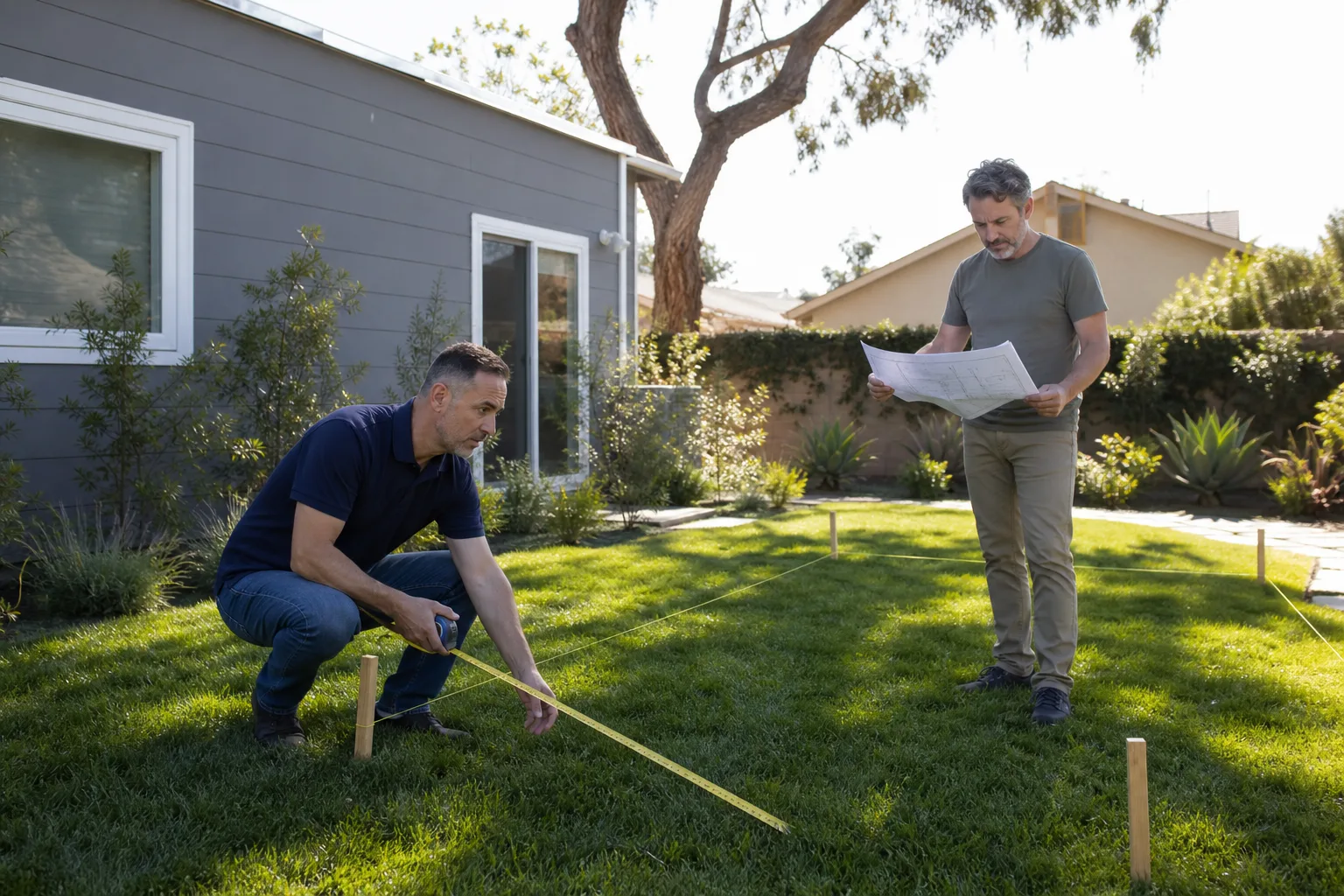
- Your lot is under 25 feet wide or has an irregular shape. San Francisco has thousands of narrow lots, especially in the Mission and Noe Valley. Setback and buildable area calculations get complicated fast, and a zoning variance might be required.
- You received a violation notice or your HOA rejected a previous submission. We regularly help homeowners respond to HOA denials with revised plans that respect the board’s concerns while still meeting state ADU size rules.
If any of these situations sounds familiar, the sooner you get a compliance review, the cheaper the fix. HOA rejections and zoning denials compound quickly once plans are drawn and deposits are paid to a prefab manufacturer like Boxabl or Plant Prefab. We’d rather catch the issue on day one than on day ninety.
Our HOA & Zoning Compliance Process
We treat compliance as an engineering task, not an administrative afterthought. Every step is documented, every finding is shared in plain English, and you always know who’s doing what. Here’s how we work on a typical San Francisco ADU:
- Document pull and property audit. We pull your current title report, HOA CC&Rs (if applicable), zoning designation, and any prior permits on file. This gives us the real constraints, not the assumptions. Many San Francisco properties carry old permits or unrecorded variances that change the entire compliance picture.
- Compliance mapping. We create a simple one-page summary of what your HOA requires, what the city’s zoning code requires, and what state law requires. Where they conflict, we flag it. (A quick example: your HOA may cap ADUs at 400 square feet, but state law allows up to 850 square feet for a one-bedroom. State law generally wins, but the conversation with your board needs to be handled carefully.)
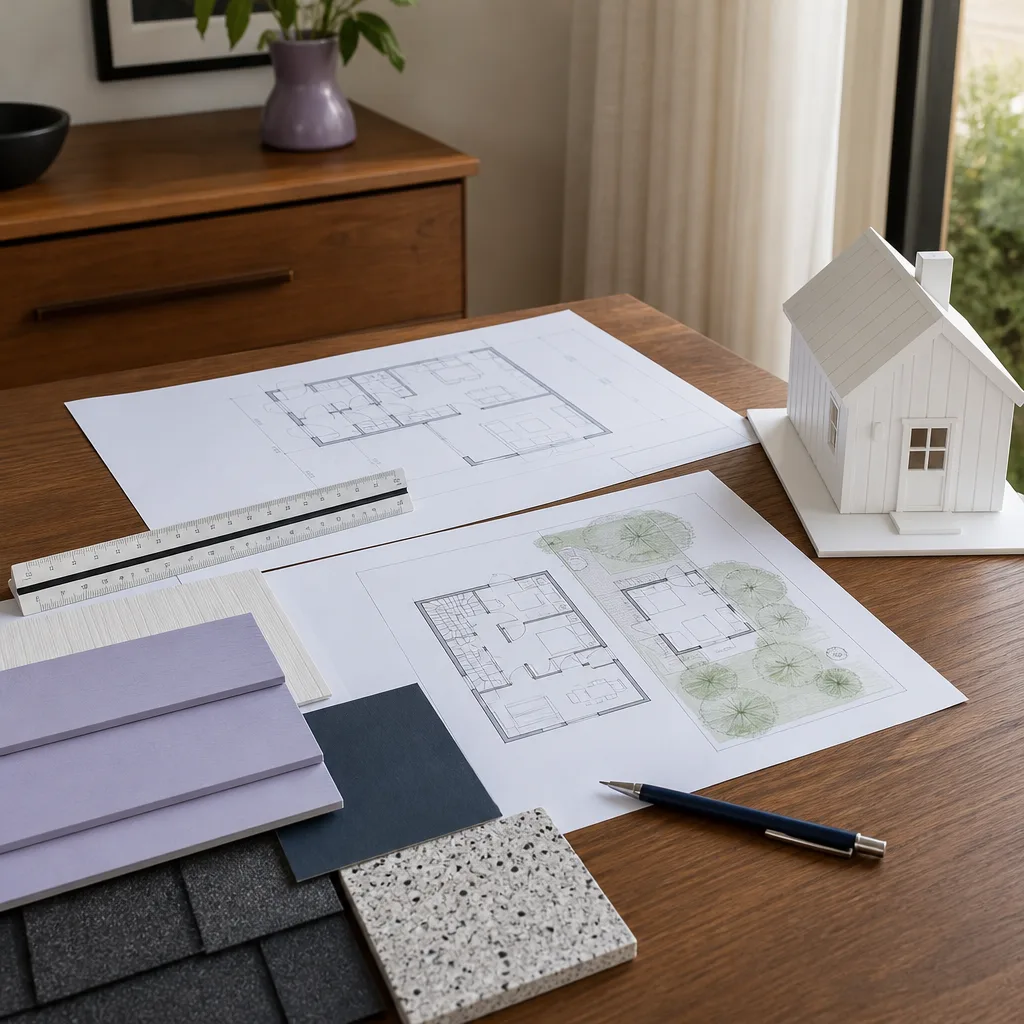
- Design review preparation. If your HOA needs an architectural submission, we prepare the full package: site plan, elevations, material specs, and a written narrative. We reference materials by name, like James Hardie cladding or a Tuff Shed prefab foundation system, so the board knows exactly what they’re approving.
- City planning submittal. We file for the appropriate permits, whether that’s a building permit, a site permit, or a variance. Every submittal includes the compliance memo we built in step two, which reduces requests for information from city planning staff.
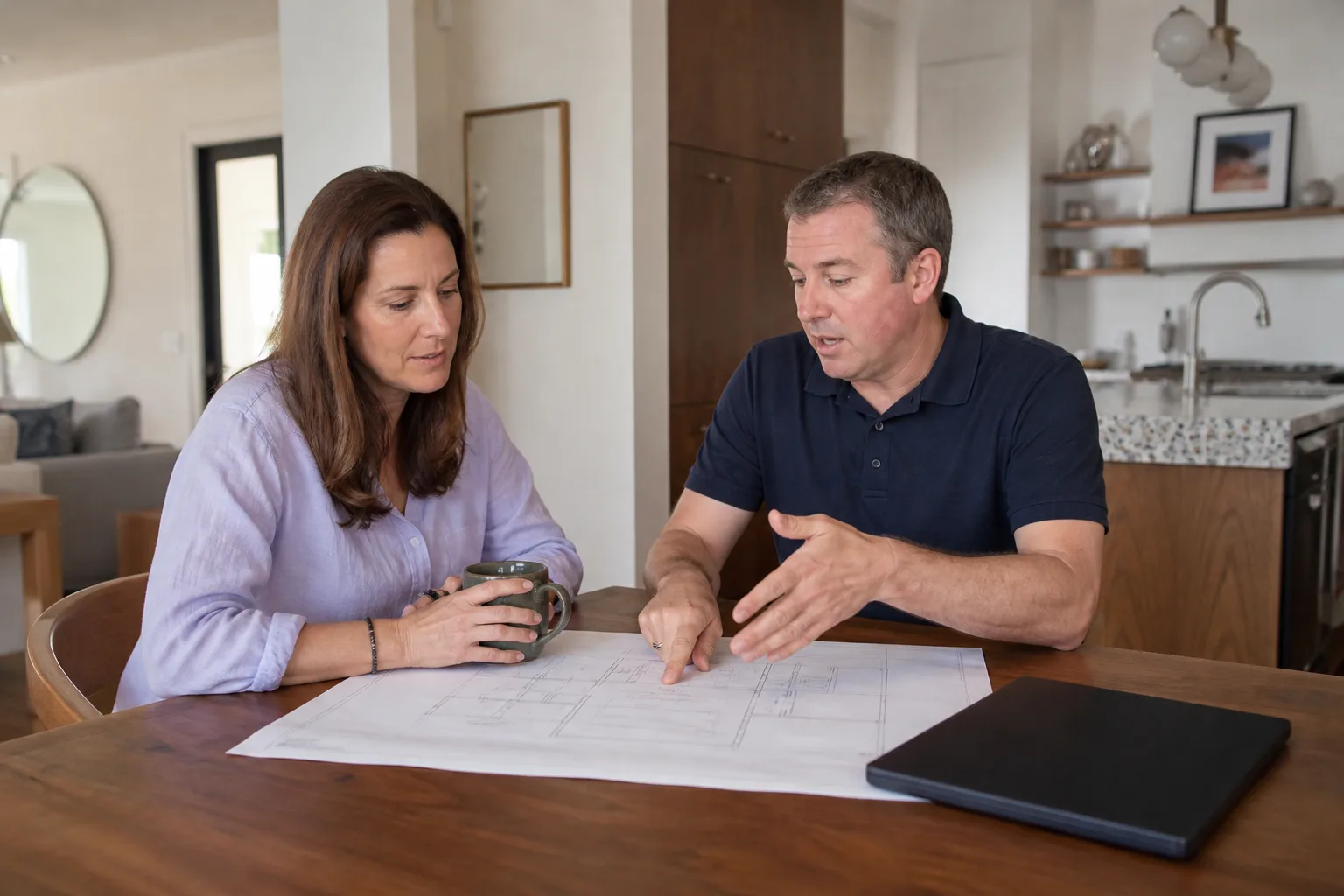
- Meeting representation. If your HOA board requires an in-person or virtual hearing, we prepare you with talking points and attend with you when requested. Most board decisions in San Francisco come down to three concerns: design compatibility, parking, and construction noise. We address all three head-on.
- Final confirmation. Once approvals are in hand, we document every condition and include them in your construction file. Your builder (which is often us, on a full ADU project) builds to those conditions exactly.
You get a written copy of every submission, every response, and every approval. No verbal “we’ll handle it” and then silence for six weeks.
HOA & Zoning Compliance Pricing in San Francisco
Compliance work in San Francisco typically falls into three tiers, depending on how deep the issue goes. A standalone compliance review, where we pull documents and produce a feasibility memo, usually runs $950 to $1,800. A full HOA design-review package with plans and board representation lands between $1,800 and $4,200, depending on the board’s submission requirements and the number of revision rounds. A variance or discretionary review through the city, which is the heaviest lift, ranges from $4,500 to $9,000 because it involves planning department hearings and often a written finding.
Here’s what affects your final number:
- HOA submission complexity. Some boards want a 3-page PDF. Others want full architectural drawings, material swatches, and a signed noise-management plan. The difference is real hours.
- Zoning relief required. If you need a variance, a conditional use authorization, or a rear-yard modification, the cost jumps because of public noticing requirements and hearing time.
- Number of revision rounds. Boards and city planners both request changes. We build typical revision rounds into the estimate, but if a board requests three rounds of design changes, that adds time.
- Topographic or survey work. Some San Francisco lots, especially in areas like Twin Peaks or Diamond Heights, need new survey or elevation data before a compliance memo can be finalized.
Every estimate is a written price before any work starts. No verbal ballparks that slide upward. No “we’ll figure out the cost later.” And every project includes a free second visit if a covered compliance fix fails. Call (424) 328-5746 and we’ll quote your specific property, usually within one business day.
Key Takeaways
- HOA compliance and city zoning are separate tracks. Both must clear before you build.
- San Francisco’s zoning code includes specific ADU rules around setbacks, height, and floor area that differ from single-family-home additions.
- State law gives you rights your HOA may not want to honor. We know how to have that conversation.
- Written pricing, a live person on the phone 24/7, and a 365-Day Done Right Promise are standard on every compliance project, not upgrades.
- We reference real materials and prefab brands like James Hardie, Tuff Shed, Boxabl, and Plant Prefab in our submissions so your board reviews exactly what will be built.
Why HOA Compliance Fails Without Local Zoning Knowledge
Most HOA compliance work fails because someone treats it as two separate jobs: deal with the HOA, then deal with the city. In San Francisco, that split is especially dangerous. The city’s ADU program runs under both local ordinance and state law, and some state provisions override your HOA’s restrictions. If your compliance consultant doesn’t understand which rule wins in which scenario, they’ll either over-promise to your board or quietly under-deliver to you.
We see this pattern routinely in San Francisco’s older HOAs, particularly in established communities around Lake Merced, Forest Hill, and West Portal, where board members are often volunteers with strong opinions and limited exposure to current ADU law. A board that rejects an ADU based on an outdated 2018 rulebook creates a delay the homeowner eats. We update our compliance library quarterly with changes to state code, San Francisco’s planning code, and typical HOA bylaw patterns, so when we present to a board, we’re presenting current law, not a memory of it.
That distinction is why we pair compliance work with our broader ADU Design & Permitting in San Francisco practice. A compliance memo that says “you can build 700 square feet here” is only useful if the design team then draws a 700-square-foot plan that fits the lot. When both functions sit under one roof, the plan you get approved by the board is the plan that gets built. No translation errors between consultant and architect.
What We Actually Do With HOA Documents
Your HOA’s CC&Rs, bylaws, and architectural guidelines are the governing documents. We read all three, because boards frequently cite one document while ignoring another. Our typical document review includes:
- Finding every ADU-related restriction: size caps, style requirements, setback overlays, roof pitch rules, material restrictions.
- Cross-checking each restriction against state and local law to determine enforceability.
- Drafting a compliance letter that either confirms your project plans meet HOA standards or identifies specific conflicts, with a recommended resolution for each.
- Preparing the architectural review package per the HOA’s own checklist, so the board sees a complete submittal the first time.
- Scheduling follow-up with the board or management company, including attending hearings when timelines are tight and board meetings are only held monthly.
We’ve helped homeowners through boards that met in person and boards that conducted reviews entirely by email. The format matters less than the accuracy of what’s submitted. In both cases, a well-prepared package moves faster than a good argument at a hearing.
Zoning Triggers Specific to San Francisco ADUs
San Francisco’s zoning code treats ADUs differently depending on whether they’re attached, detached, or created through a garage conversion. A few of the triggers we check on every project:
- Setbacks. Detached ADUs in San Francisco generally require a 4-foot rear and side-yard setback, though some lots qualify for reductions. Attached ADUs may follow the primary structure’s setback rules.
- Height limits. A detached ADU in a typical RH-1 or RH-2 zone can usually reach 16 feet with a pitched roof, but site-specific height districts may be stricter. In neighborhoods on sloped lots, like Bernal Heights or Diamond Heights, the height measurement itself gets tricky.
- Rear-yard coverage. San Francisco limits rear-yard coverage for detached structures. Combining a detached ADU with a large existing garage or shed can exceed coverage, which pushes you into a variance.
- Open space minimums. Most residential zones require a certain amount of open space per lot. An ADU that eats into that open space needs careful planning.
- Historic or special-use districts. Parts of San Francisco fall into Article 10 or Article 11 districts with additional review requirements. If your property sits in one, you’ll want to know before you order a Boxabl or Plant Prefab unit that may not fit the district’s design rules.
Each of these triggers affects cost and timeline. We flag them in the initial compliance memo so you’re making decisions with full information, not chasing surprises after a deposit is down.
How We Handle the HOA When State Law Conflicts
California’s ADU laws are unusually strong. They preempt many local restrictions and a growing number of HOA rules. For example, state law largely prevents HOAs from unreasonably prohibiting ADUs, though HOAs retain authority to enforce reasonable design standards. The practical question is always what counts as “reasonable,” and that’s where most boards and homeowners talk past each other.
Our approach is straightforward: we never tell a board they must approve your project, and we never roll over when a board overreaches. We prepare a written analysis of how state law applies to the specific restriction the board is citing. Where the board has authority, we propose design adjustments that preserve their intent. Where the board lacks authority, we say so calmly and in writing, with citations. Most boards respond well to a documented, professional position. The ones that don’t tend to respond to the same position followed up over email and in person.
Homeowners sometimes assume hiring a compliance consultant means conflict. It usually means the opposite. The cleaner the paper trail, the fewer board meetings; the fewer board meetings, the faster your ADU gets approved.
Prefab Brands and HOA Design Demands
One under-appreciated part of HOA compliance is material and finish requirements. Some San Francisco HOAs specify cladding types, window styles, or roof colors in their architectural guidelines. If you’ve chosen a prefab unit from a manufacturer like Boxabl or Plant Prefab, those specs need to be reconciled with the HOA’s rules before you place the order.
We’ve found that boards respond well when the submittal names specific, researchable materials. Saying “the exterior will be James Hardie fiber cement plank in a neutral color consistent with surrounding homes” carries much more weight than “high-quality siding.” Boards appreciate knowing the material is a known product with a track record, not a generic promise. The same applies to foundation systems; mentioning Tuff Shed for accessory structures when relevant helps a board visualize the end result.
Because we’re authorized to work with these brands, we can pull actual material specifications and dimension sheets for the submittal package. When a board asks what the finished ADU will look like, we show them the manufacturer’s product pages and a rendering matched to your lot. That level of specificity tends to shorten review cycles.
FAQs – HOA & Zoning Compliance
How much does HOA and zoning compliance cost in San Francisco?
Standalone compliance reviews in San Francisco typically run $950 to $1,800, full HOA design-review packages with board representation range from $1,800 to $4,200, and city variance or discretionary review work lands between $4,500 and $9,000. Your specific price depends on HOA submission complexity, zoning relief required, revision rounds, and whether new survey work is needed. Call (424) 328-5746 for a written quote on your property. Estimates are free.
Can my HOA actually stop me from building an ADU in San Francisco?
Your HOA can require architectural review and enforce reasonable design standards, but California state law limits how far an HOA can go in prohibiting ADUs outright. The conflict usually turns on what’s “reasonable.” We prepare a written legal analysis for your specific HOA restrictions and either adjust the design to satisfy the board or document why the restriction doesn’t apply. Most projects clear the board once the analysis is in writing.
How long does HOA and zoning compliance take in San Francisco?
For a typical ADU without a variance, the compliance and design-review process usually takes 45 to 90 days from document pull to HOA approval, assuming your board meets monthly. If you need a zoning variance or discretionary review through the city, add another 3 to 6 months for noticing, hearing dates, and decision periods. We build the timeline out for your specific board and your specific zoning triggers on the first call.
Do you provide a written price before starting compliance work?
Yes. Every compliance project starts with a written price, not a verbal estimate. That price includes the document review, the compliance memo, the HOA submittal package, and a set number of revision rounds. If scope changes, you approve the change in writing before we proceed. It’s part of The Relay Visibility Guarantee, and it applies to every project we touch.
What if my HOA rejects my ADU plans after you submit them?
We respond to the rejection with a written analysis of the board’s stated reasons, then either revise the design or challenge the rejection if the board is overstepping its authority. Most rejections in San Francisco fall apart on close reading: the board cited a rule that doesn’t exist, applied a restriction that state law supersedes, or requested changes outside their design-review authority. We address each point directly. If a revised submittal is needed, we prepare it and re-file within the board’s next review cycle.
Ready to Know Exactly Where Your ADU Stands?
You don’t need to guess whether your HOA will approve an ADU or whether your lot clears San Francisco’s zoning rules. You need a documented answer, in writing, from someone who’s done this before. We’ll pull your documents, map your property’s compliance, and hand you a clear, plain-English memo with your options and a written price for the work. Call (424) 328-5746 or reach out through our home page to schedule a free compliance review. A live person answers, any hour, any day.
Written by Troy Eastman, Owner at Benson ADU San Francisco, serving San Francisco.