Why San Francisco Homeowners Choose Cover ADU
Benson ADU San Francisco provides independent Cover in San Francisco ADU service and repair across the city, from panel re-squaring after seismic settling to mini-split condensate drain corrections that stop recurring ceiling stains. We work on the full Cover lineup including the S-Series, M-Series, ADU+, and the original Permit-Ready models, and our crews see how factory panel, electrical, and utility rough-ins actually perform after a few years in fog-belt lots and hillside conversions. We are not a Cover dealer or factory-authorized service center, and we’re upfront about that. What we are is a local crew that has spent years working specifically on Cover-built accessory dwellings, so when we open a panel or trace a drain line, we already know what we’re likely to find. Call (424) 328-5746 for a written service quote.
Why Trust Benson ADU San Francisco for Your Cover ADU?
Troy Eastman, owner and lead builder at Benson ADU San Francisco, trained in construction technology at Los Angeles Trade-Technical College and spent years working through every phase of residential building before focusing exclusively on ADUs. For the past several years, Troy and his crew have been working on Cover in Berkeley and across San Francisco, including jobs tucked into tight lots near Bernal Heights and hillside conversions where foundation movement is a fact of life. That matters because Cover ADUs are panelized structures. When the ground shifts, the panels tell you exactly where the stress is. Our technicians know which seams to inspect first, which fasteners are prone to snapping at the bottom track, and which factory details need adjustment for San Francisco’s marine layer. We default to Cover’s stock panel, flashing, and window/door hardware when available, and we use quality aftermarket equivalents only where they outperform the original in this climate. Everything goes in writing before we start.
Common Cover ADU Problems We Fix in San Francisco
Factory-built ADUs are engineered well, but San Francisco’s marine-clay hillsides and fog-heavy air put specific stress on Cover products. These are the issues we see most often:
- Panelized wall cassettes out of square after seismic settling. When a hillside foundation corner settles even a half inch, the factory-aligned wall and roof panels shift with it. The result is drywall cracking along panel seams and doors that suddenly bind. In S-Series and M-Series units on sloped lots, we regularly find the bottom track fasteners are the first point of failure.
- Factory-installed mini-split condensate drains pitched too flat. The factory sets the drain at a minimal slope, which works in a controlled environment but not always in San Francisco’s damp, cool air where condensation runs continuously. S-Series units in particular show overflow stains along the closet ceiling when the condensate backs up and drips from the cassette. We re-run the drain at a proper quarter-inch-per-foot fall.
- Utility chase cover plates loosening after repeated building inspections. San Francisco’s inspection process is thorough, which means those chase covers over the wiring behind the kitchenette get opened and closed many times. The factory fasteners loosen and strip. Exposed wiring behind a loose plate is a code issue and a safety one. We replace the anchors and re-secure the plate properly.
- Perimeter steel screw heads snapping at the bottom track. This is a signature failure on hillside Cover units. When the foundation settles differentially by as little as half an inch, the rigid steel screws at the base track can’t flex, so the heads snap off. The wall then loses its positive connection to the foundation. We replace them with epoxy-set stainless anchors rated for this exact condition.
- Roof cassette flashing leaks in wind-driven rain zones. San Francisco’s west-side neighborhoods get rain that comes in sideways. The stock flashing on older Cover roof cassettes was not designed for wind-driven moisture at the eave transitions, and we see water intrusion at the panel-to-fascia joints. We re-flash with marine-layer-rated materials and re-tape the affected seams.
Cover Parts & Our Repair-vs-Replace Approach
For Cover structural components (panels, flashings, window and door hardware), we always try to source from Cover’s stock inventory first. When those parts are unavailable or the lead time is unreasonable, we use aftermarket equivalents that are actually better suited to San Francisco conditions, particularly for seals, fasteners, and mini-split drain components. Marine-layer corrosion is real here, and a standard zinc fastener will fail years before a stainless or epoxy-coated one. We stock the common Cover-specific hardware locally so most repairs are not waiting on a freight shipment. On repair versus replace: we recommend replacing, not patching, any cassette wall that has shifted more than three-eighths of an inch out of square. Shimming and re-anchoring a badly shifted panel on San Francisco clay is usually false economy. The wall will keep fighting the hill, and you’ll pay twice. Call (424) 328-5746 if you have a Cover ADU that needs an honest assessment.
Our Cover Service Process – Step by Step
- 1
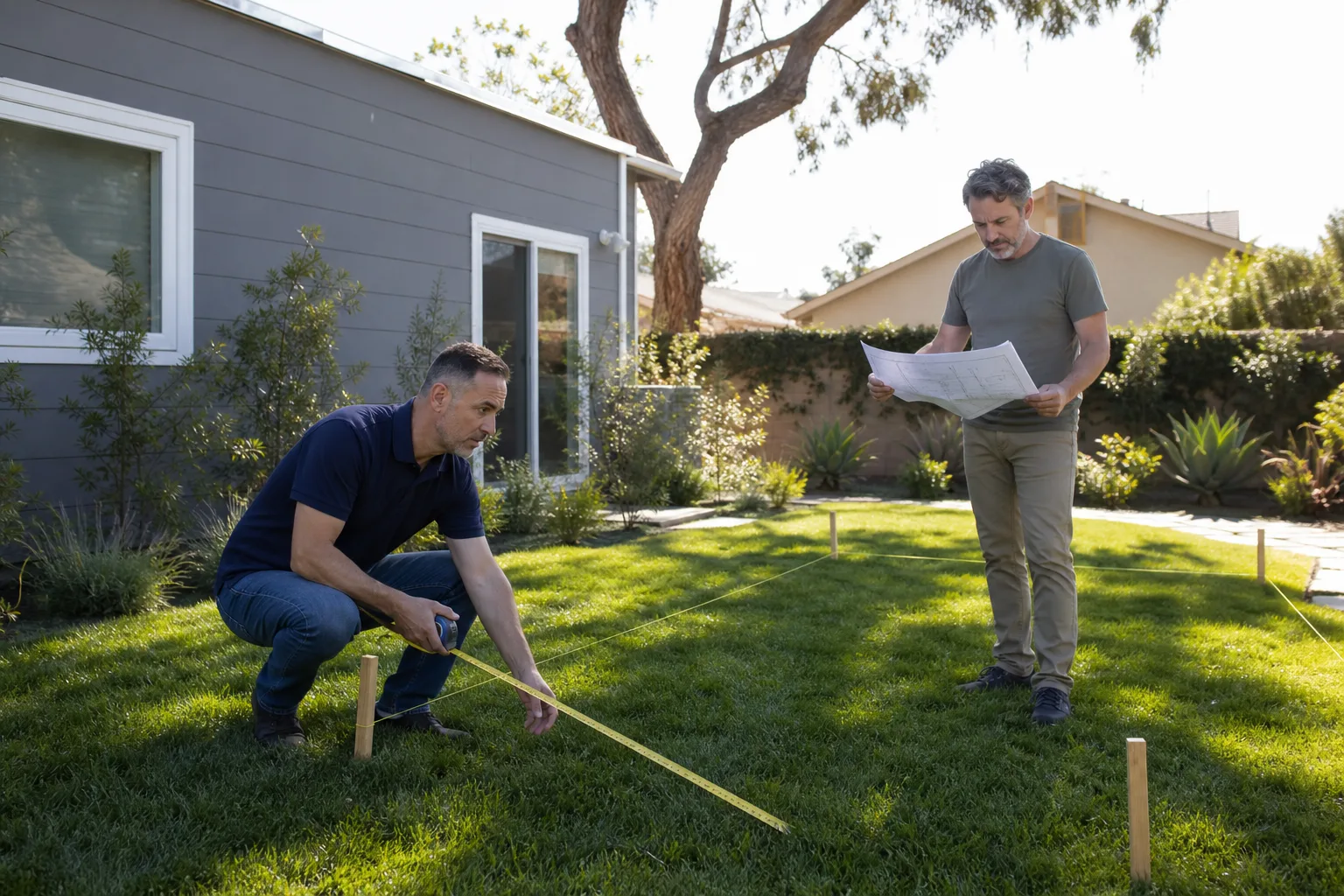
Diagnosis. We start with a site visit and a panel-by-panel inspection. On Cover units we check for seam separation, bottom track fastener condition, squareness of the wall cassettes, and the mini-split condensate drain slope. We document everything with photos and measurements.
- 2
Written quote. You get a line-item price in writing before any work starts. No verbal ballpark that shifts once we’re on the wall. If the fix is small, the quote is small. If the wall cassette needs re-squaring, the quote reflects exactly what that takes.
- 3
Repair or install. Our uniformed, background-checked techs do the work. For panel re-squaring, we pull the bottom track fasteners, jack and shim the cassette back to plumb, replace snapped screws with epoxy-set stainless anchors, and re-tape the panel seams. For drain corrections, we re-run the line with proper fall and test it before closing up.
- 4
Test and verify. We run the systems we touched (mini-splits, electrical, door alignment) and document the final condition with photos. If it is not right, it gets fixed before we leave.
- 5
Warranty. Every job carries our 365-Day Done Right Promise in writing. If something fails within a year, we return and make it right.
Cover Products We Service & Install in San Francisco
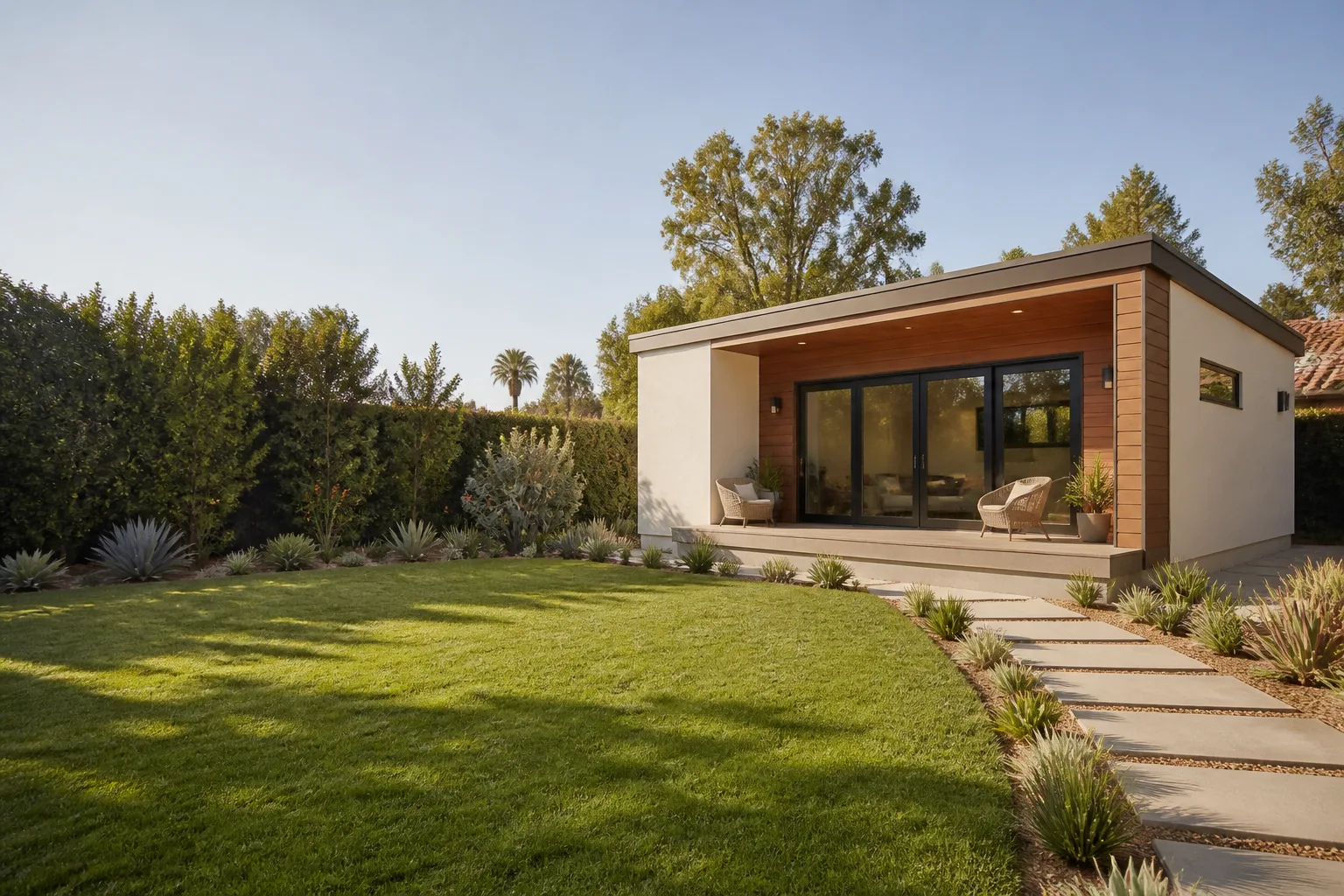
We work on the complete Vallejo Cover service and product range in San Francisco. The S-Series studio and one-bed back houses are the most common units we service, followed by the two-bedroom M-Series. We also service the ADU+ multi-room models with interior stairs or loft configurations, and we still see the original Permit-Ready units that used San Francisco’s pre-approved plan sets. For installation support, we handle site assessment, foundation and grading work, and electrical panel upgrades that Cover units require. We stock common Cover-specific fasteners, flashing profiles, and mini-split drain components locally, which means less waiting for parts and faster turnaround on common repairs.
We Also Service These Brands
While Cover is a significant part of our ADU work, we’re not a single-brand shop. Benson ADU San Francisco also offers our ADU Builders services for Abodu and Dvele units, which share similar panelized construction methods but have their own hardware nuances. If you have a mixed-brand setup or are considering a change, we can assess both without a sales pitch attached.
FAQs – Cover ADU Service in San Francisco
No, and no independent contractor can. Cover’s structural warranty is a contract between you and Cover. Our work carries its own written 365-Day Done Right Promise, and we never perform a repair that would knowingly void a manufacturer warranty. If a fix falls under Cover’s warranty, we’ll tell you to pursue that route first. If warranty coverage has lapsed or the issue is outside the warranty scope, we will quote the repair in writing. Call (424) 328-5746 to discuss your specific situation.
In most San Francisco cases, no. The S-Series is a panelized studio or one-bedroom back house, and the wall cassettes and roof panels are sized for that specific footprint. Widening or extending the structure means re-engineering the roof load path, which typically requires removing the roof cassettes. There are edge cases where an under-utilized interior space can be converted, but a true second bedroom addition on an S-Series is generally a tear-off-and-rebuild proposition. We will tell you that straight before you spend money on drawings.
Usually it’s the breaker, not the mini-split. AFCI breakers are sensitive to the small electrical arcs that inverter-driven mini-split compressors produce on startup. We see this on Cover S-Series and M-Series units across San Francisco, often after a few years of service. The fix is usually an AFCI breaker rated for HVAC motor loads, not a new mini-split. Before we replace anything, we test the circuit and confirm the actual trip cause. That diagnosis is part of any written estimate.
It depends on the unit’s condition and the new site’s foundation requirements. Cover Permit-Ready units were built on pre-approved San Francisco plan sets, but moving a panelized structure means disassembling the cassettes, re-quaring them on the new foundation, and re-engineering the base track connections. If the panels have settled or the fasteners are corroded from the marine layer, costs can approach a new build. We do move Cover units, but only after a structural assessment tells us the unit is worth moving. Call (424) 328-5746 for a site evaluation and written quote.
Yes, in many cases. The stock flashing on Cover roof cassettes was designed for standard rainfall patterns. San Francisco’s west-side neighborhoods, particularly the Sunset and Richmond, see rain driven nearly horizontal by ocean wind. The eave-to-fascia transition leaks when the original flashing profile cannot shed water fast enough. We replace the stock flashing with marine-layer-rated profiles and re-tape the panel seams. We also check the roof-to-wall transition, which is the second most common water entry point on hillside Cover units.
Most Cover ADU service calls in San Francisco run between $180 and $850 for diagnosis and a targeted fix. Panel re-squaring work on a hillside unit starts around $2,500 and goes up depending on how many cassettes are out of square and how much shimming is required. Mini-split drain re-pitches typically fall between $400 and $900. Foundation and grading work, electrical panel upgrades, and full re-flashing jobs are quoted individually after site inspection. Every quote is written and line-itemed before work starts. Call (424) 328-5746 for an exact number on your Cover ADU.
Book Your Cover Service in San Francisco, CA
If your Cover ADU has cracks at the panel seams, a mini-split that keeps staining the ceiling, or doors that have started binding, we can diagnose it and put the fix in writing. Price it in writing, build it right, no surprises. Call Benson ADU San Francisco at (424) 328-5746 or ask for Troy to schedule your free estimate. We answer the phone.
Written by Troy Eastman, Owner & Lead Builder at Benson ADU San Francisco, serving San Francisco since 2006.